
 |
I’ve been feeling my bones lately. No, not as in “I can feel my achy old bones,” but literally, beneath the skin. It’s partly because I’ve lost a great deal of weight this past year, due to the good offices of GLP-1 and long daily walks. (It’s also because, as we age, our skin loses collagen, literally becomes thinner. Yes, old folks really are “thin-skinned.” Don’t mess with us.)
And it feels … strange. I don’t remember my bones being right beneath the skin, in such intimate contact. Specifically, I’ve been feeling my rib cage. I’ve come to think of it as a cage—not metaphorically, but literally. It’s a cage that holds the heart and lungs not only for protection, but as a prison, the beating and the breath. Think about that for a minute. Your heart is actually in a cage, like a wild animal, pacing back and forth, unable to roam free. Think of the mighty breaths we could take if our lungs were not knocking against the breastbone! Metaphor is destiny.
What about the mind?
I’ve never bought into the ghost in the machine theory. The mind is not separate from the body, like an air traffic controller directing traffic from the tower. Duality is a myth meant for little kids. Every part of the body is essential. I am my body.
The brain doesn’t sit on a throne, signing executive orders. It goes out to visit every cell in the body through its neural network, like the caliph Harun al-Rashid in The Thousaand and One Nights, going out among his people under cover of the night.
Or, more aptly, the body is a democracy.
Every part of the body is in communication with every other part through the exercise of bioelectricity, electrical potentials and currents generated by every living cell. The brain only makes these messages conscious, clothing them in words. When Walt Whitman sang the body electric, he knew what he was talking about.
As Michael Pollan puts it in A World Appears: A Journey into Consciousness, “the brain exists to keep the body alive.” It’s servant, not king. Trust your gut. Follow your heart. Vote with your feet. These aren’t just sayings. They’re directions.
The brain is literally reformed, rewired with every experience. You’ve got a contractor working in your head who never finishes the job.
And yet the brain is caged, moreso even than the heart and lungs. The brain floats in cerebrospinal fluid, completely isolated within the skull, armed not with perceptors, but interpreters. It translates sound vibrations, odor molecules, light waves, pressure points, and temperature. We don’t see color, we see different wavelengths of light bouncing off of objects. And our eyes cannot see, our ears cannot hear, we can’t smell all the immense range of stimuli the world greets us with every second of our lives. Our senses act as filters, or transformers, stepping down the voltage to avoid the massive overload of experience which would fry our brains like an omelette. Aldous Huxley makes this clear in The Doors of Perception:
“Each person is at each moment capable of remembering all that has ever happened to him and of perceiving everything that is happening everywhere in the universe. The function of the brain and nervous system is to protect us from being overwhelmed and confused by this mass of largely useless and irrelevant knowledge, by shutting out most of what we should otherwise perceive or remember at any moment, and leaving only that very small and special selection which is likely to be practically useful.”
What stands between us and the wilderness of the world? Who is the governor of our invention?
Memory.
Memory is not simply a data storage and retrieval process. Memory is the story we create about ourselves. It wishes us into existence, grants us selfhood, distorts, elaborates, appends, creates collages. Memory is the editor-in-chief of existence, which molds experience into a coherent story.
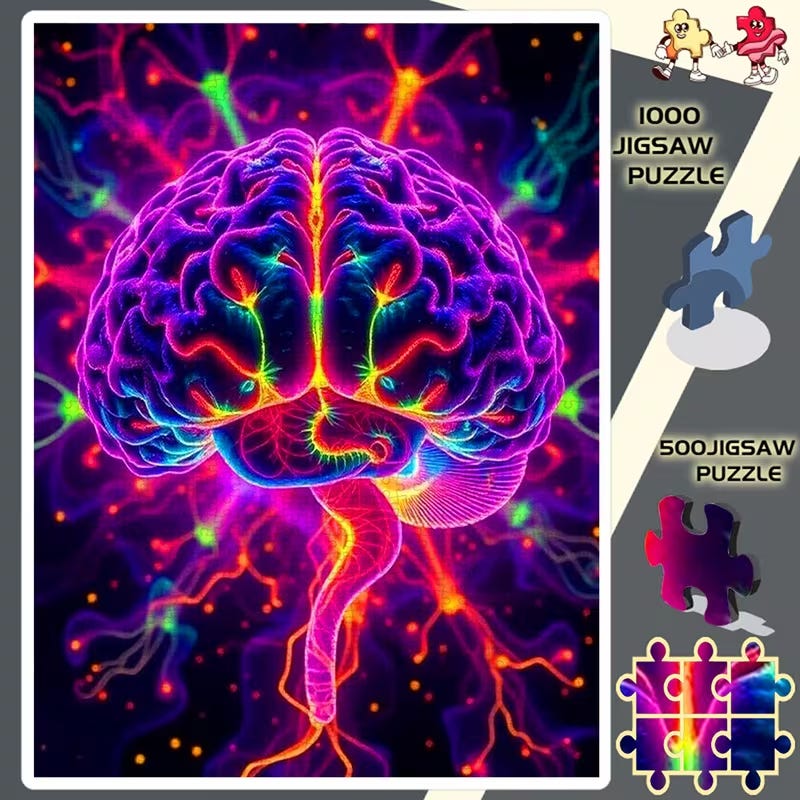
Once bitten, twice shy. Why not just once shy? Because memory enlarges or shrinks or twists experience, knots it into a pretzel, assigning meaning according to the pain or pleasure invoked. Memory is a jigsaw puzzle, fitting the pieces of our perceptions into a pretty picture with straight edges.
.Memory is the story we tell ourselves. It’s constantly revising, updating, but we’re always the main character, the hero of the story. When we act unheroically, memory tends to edit heavily. Memory does not write for a sophisticated reader. It falls back on well-shopped, dependable tropes: heroes, villains, love interests, sidekicks, hearts full of passion, jealousy and hate, happy endings or tragic downfalls.
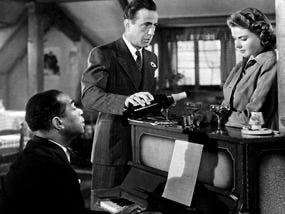
But let’s face it: our lives are not stories. There’s no rising action, building toward a crescendo: there’s only the steady hum of life, the quotidian regime. Yet memory would have us think so, because story is how how organize our lives, give meaning to them.
Memory is Iago, constantly betraying lived experience. It has its own agenda: to protect story. This is why the term “eyewitness account” is a misnomer. According to the Innocence Project in 2010, eyewitness misidentification played a significant role in over 75% of the more than 230 exonerations that had occurred to date based on DNA evidence.
Interestingly, UC San Diego psychologist John Wixted fights against conventional wisdom. He says that the first eyewitness account can be trusted. He believes the problem is not memory, but contaminated memory. Here’s his take:
“The key thing for testing a witness’s memory correctly is to test it only once for a given suspect, because even that first test changes the witness’s memory for that person.”
This is less than convincing, at least to me. I’m no psychologist, but I am a novelist, and I would argue that memory is contaminated as soon as it’s put into the straitjacket of words.
Why? Because as soon as we are called upon to give an account, we enter memory’s domain, where it mills the event into story, with beginning, middle and end, to make sense of the event to ourselves and others. Plus, all the other stories in our memory help to shape that story, to anthologize it, to slot it into a consistent theme or rubric. Stories within stories within the story of our lives. It has to all cohere.
How can we get out of the cages? I don’t have answers, but I do have suggestions (although no five-point plan, sorry). We can breathe deeper, run faster, expanding the limits of our hearts and lungs.
We can throw out the old stories, the stock answers. Expose yourselves to new stories through new books, new travel, new people. Question everything, especially our memories, which means questioning ourselves. Make it a reflex. We can rewire our brains. We can reshuffle the Rubik’s cube that is the cerebral cortex. We can live closer to the truth.
I feel it in my bones.
(Audio version available here on Youtube.)
No comments yet
So leave a comment already
Thanks a million!